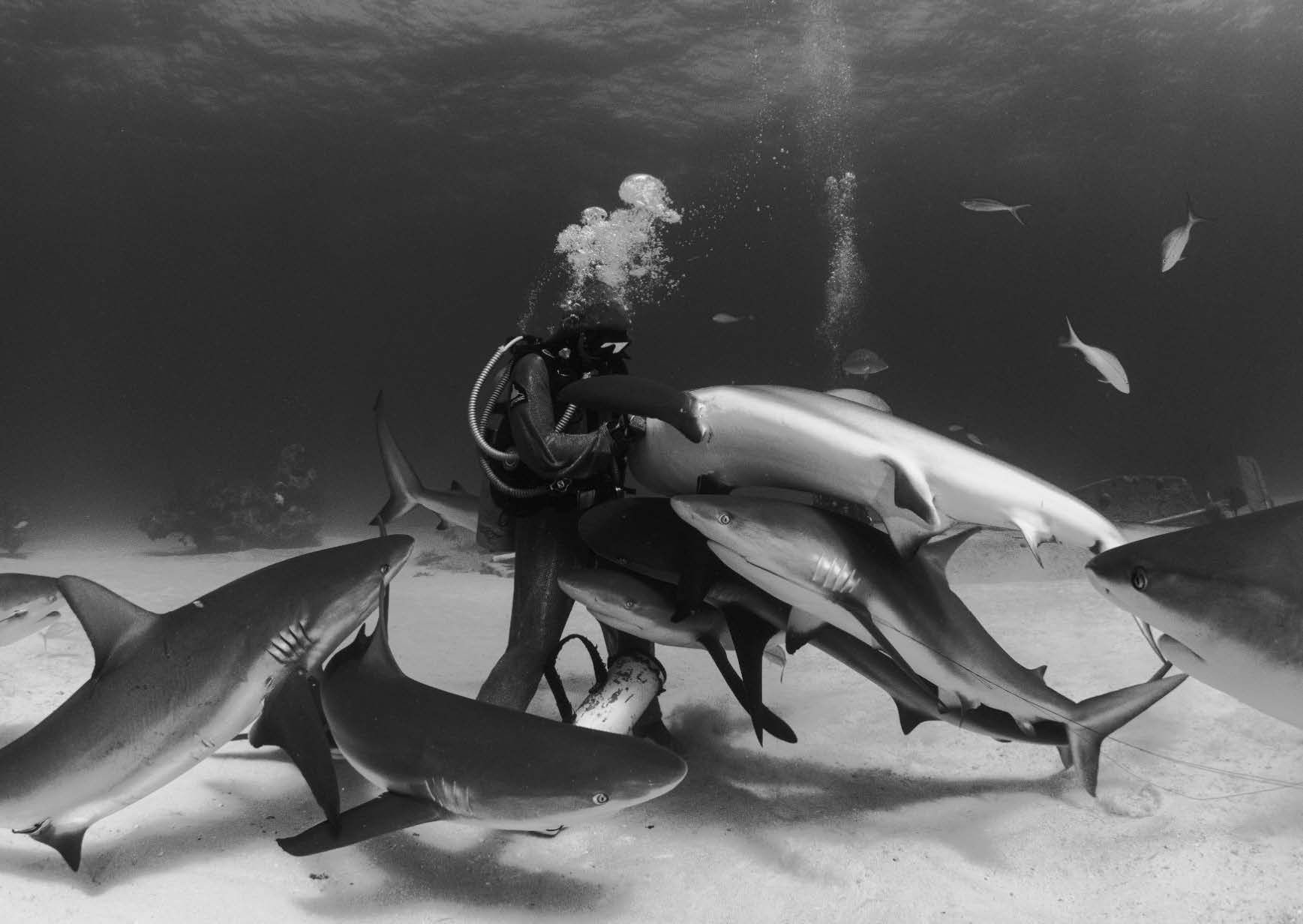
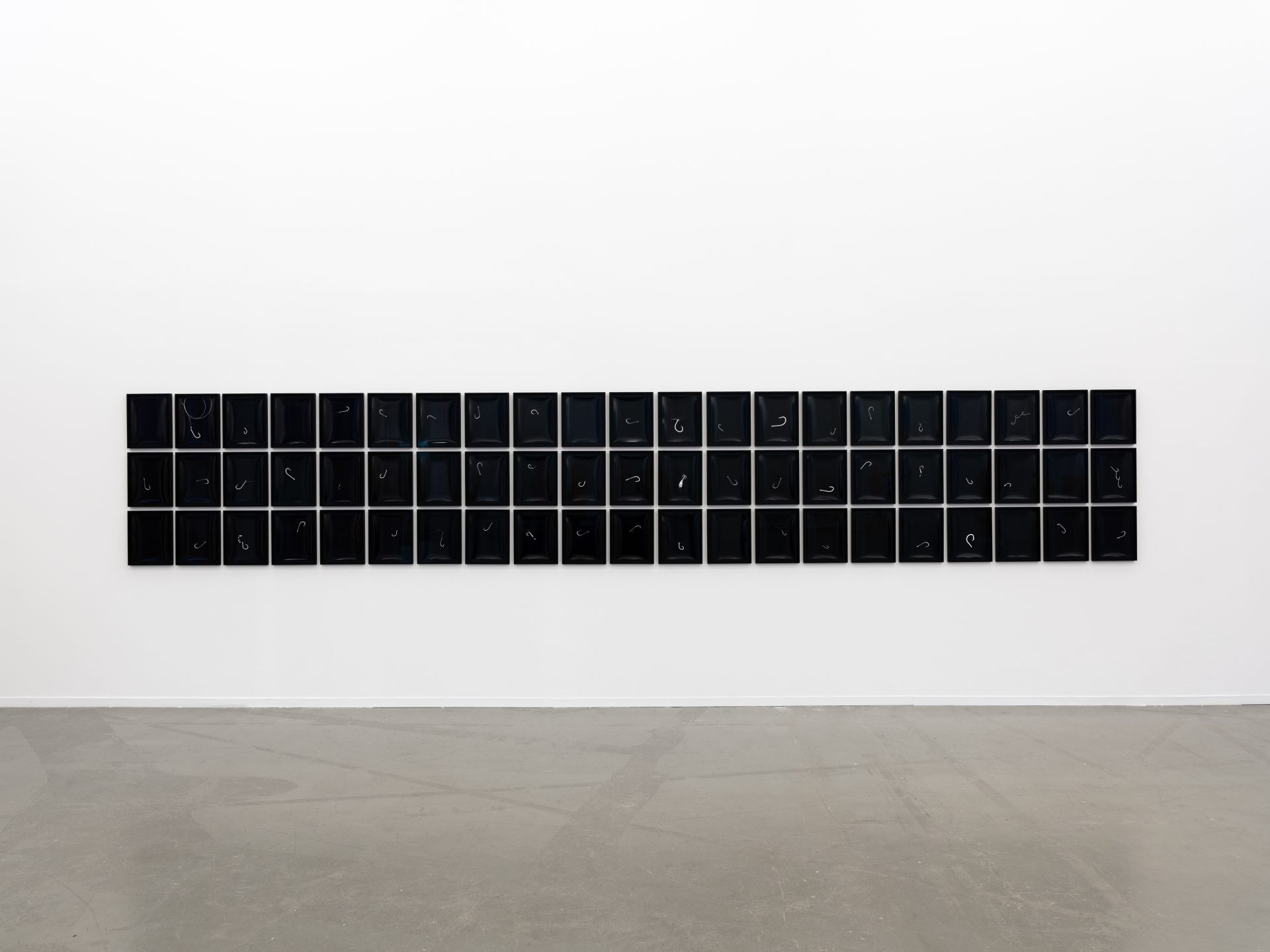
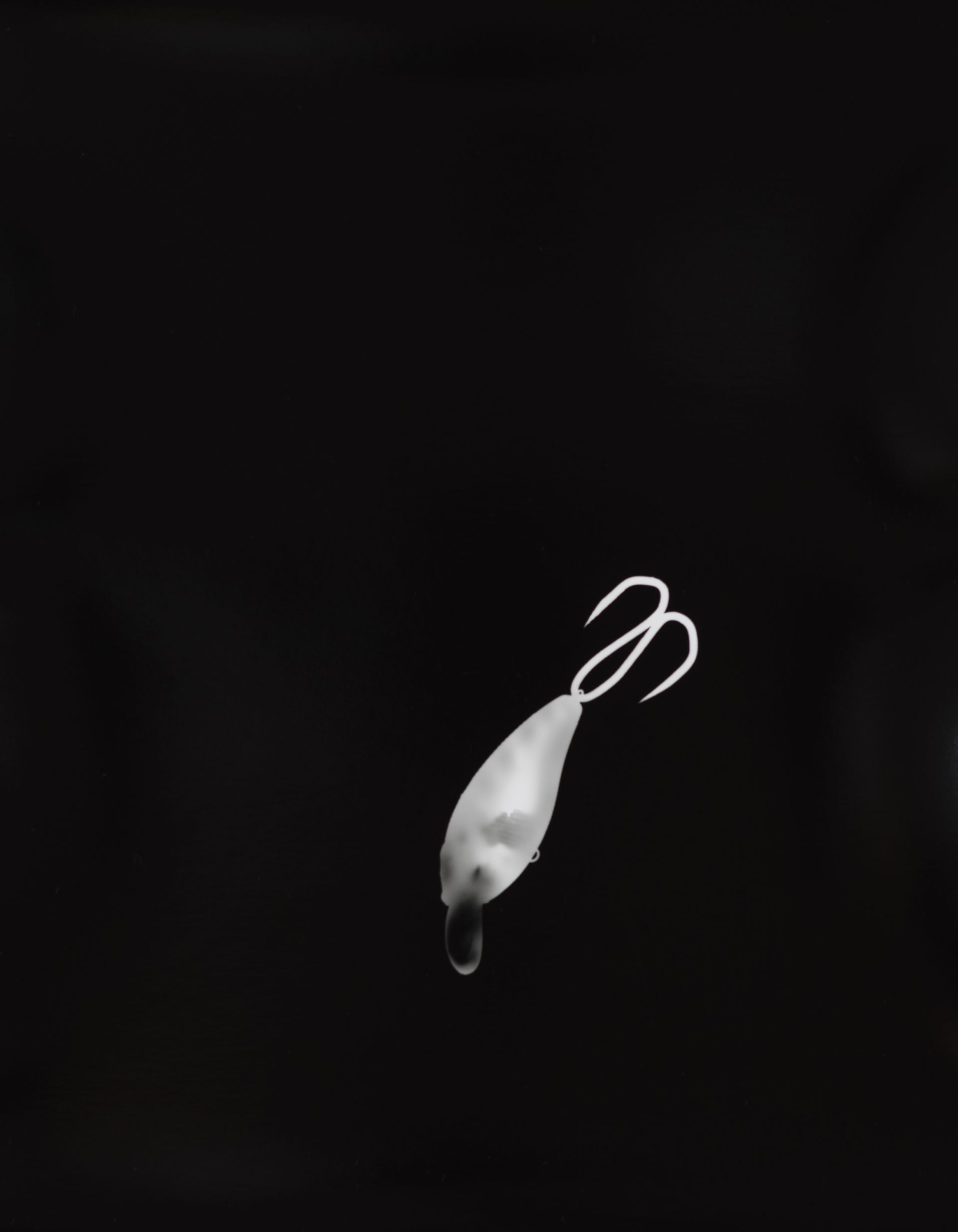
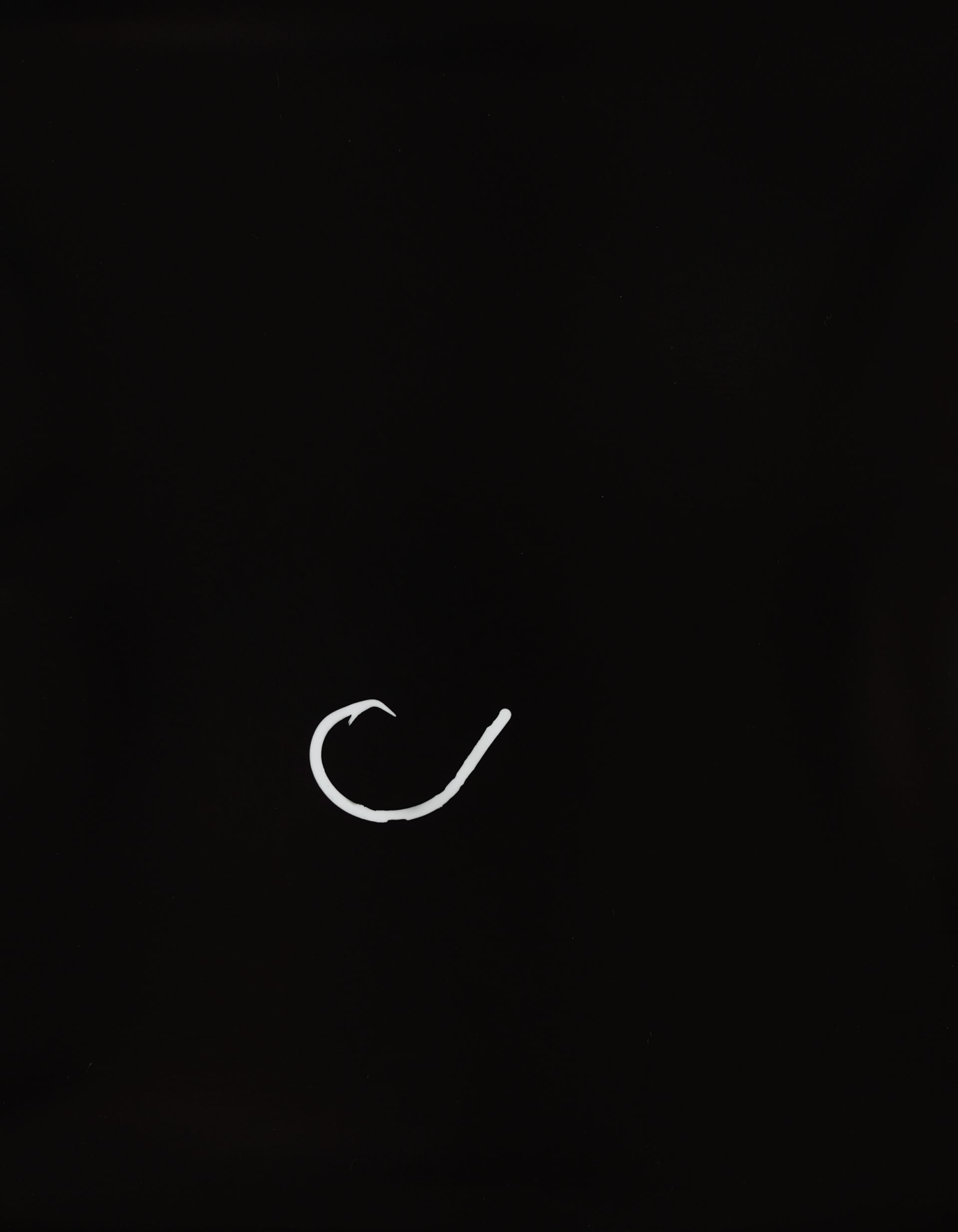
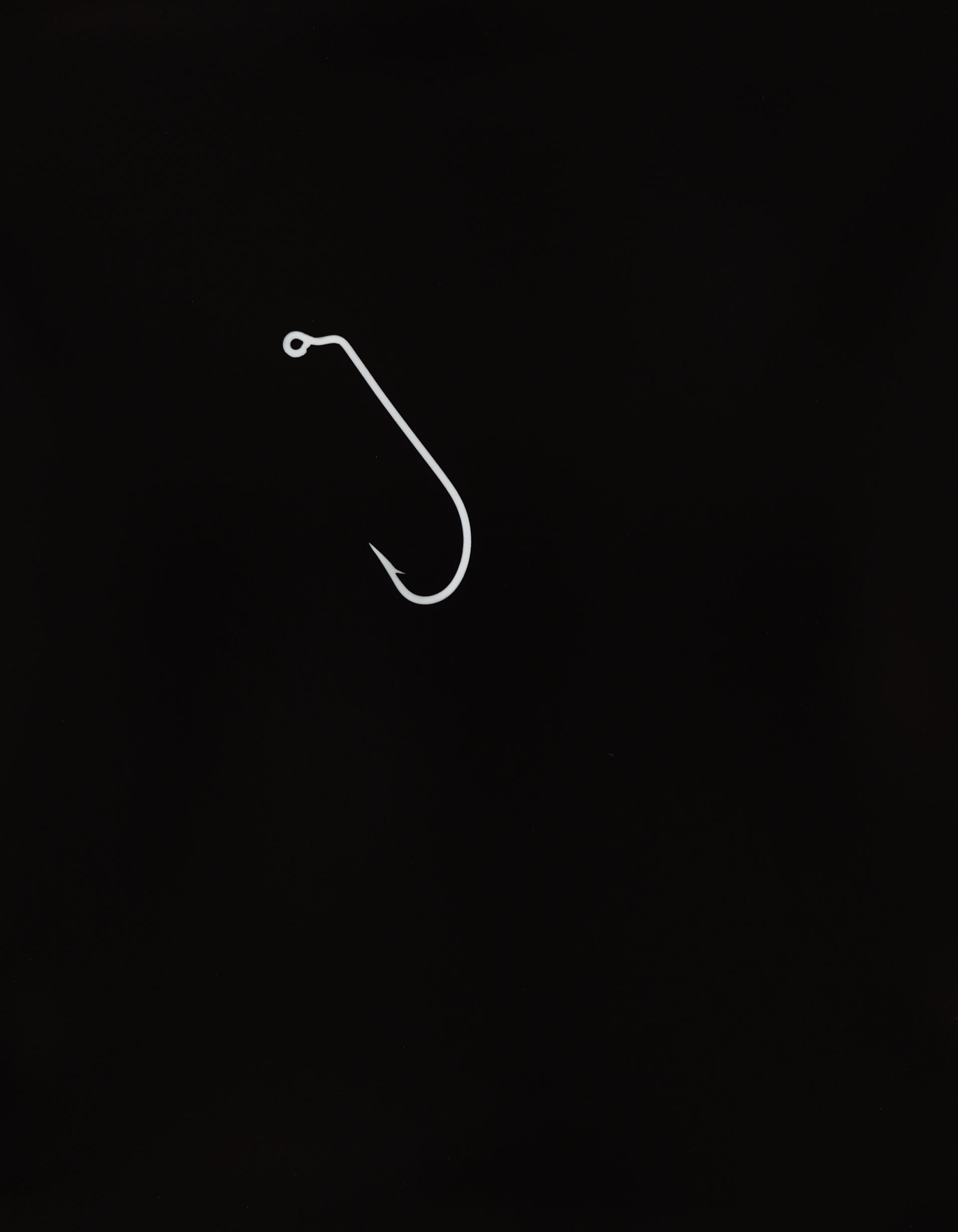
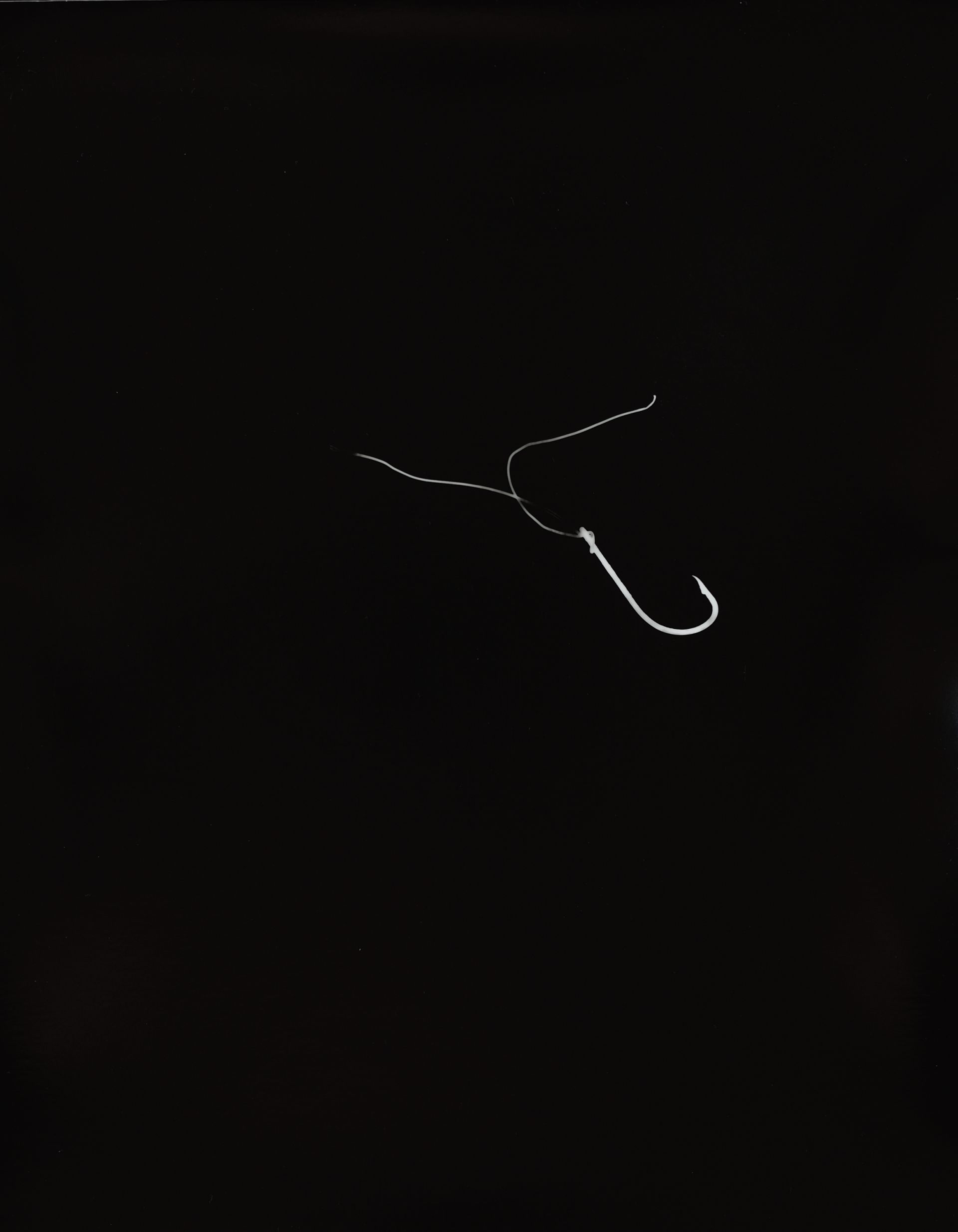
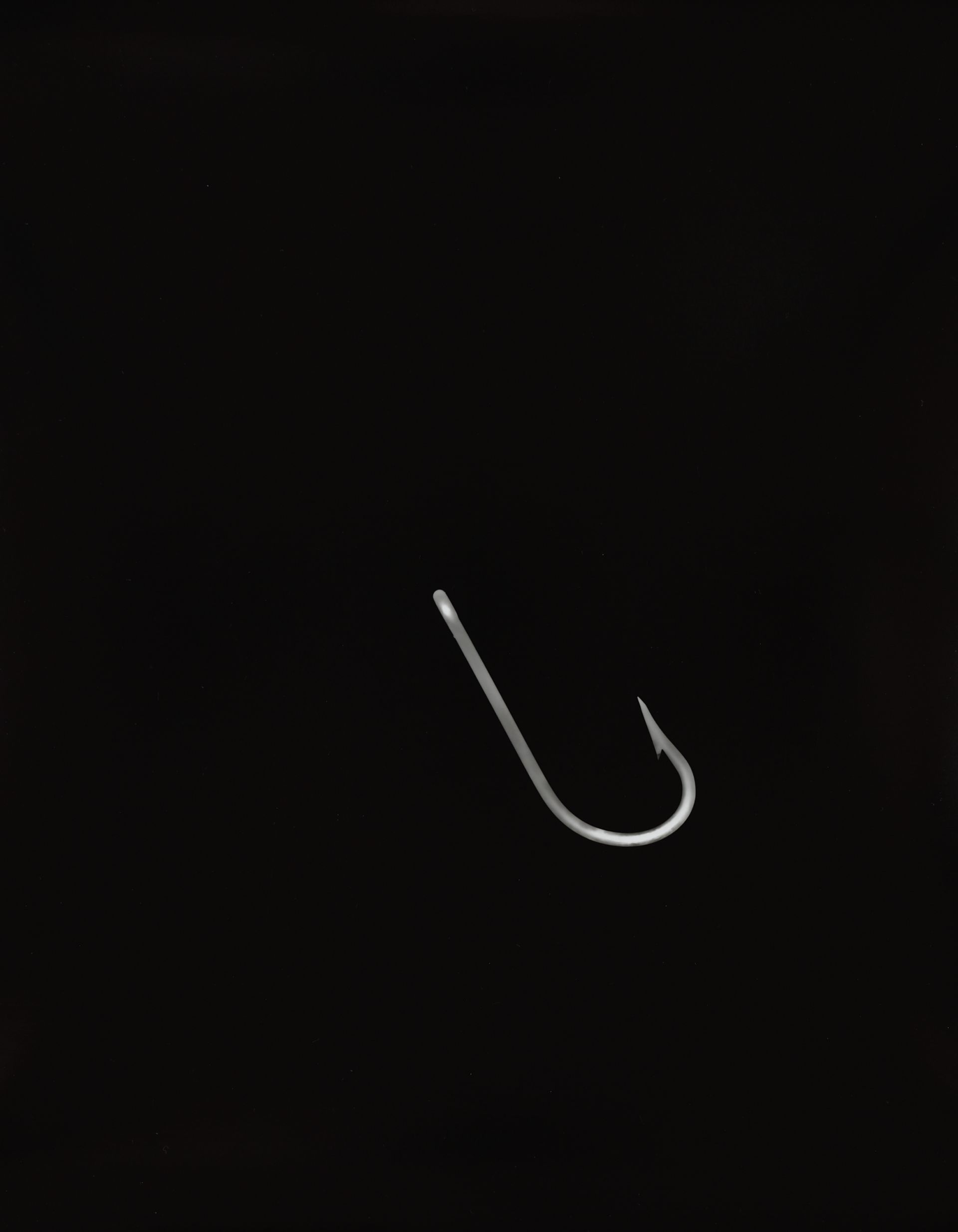
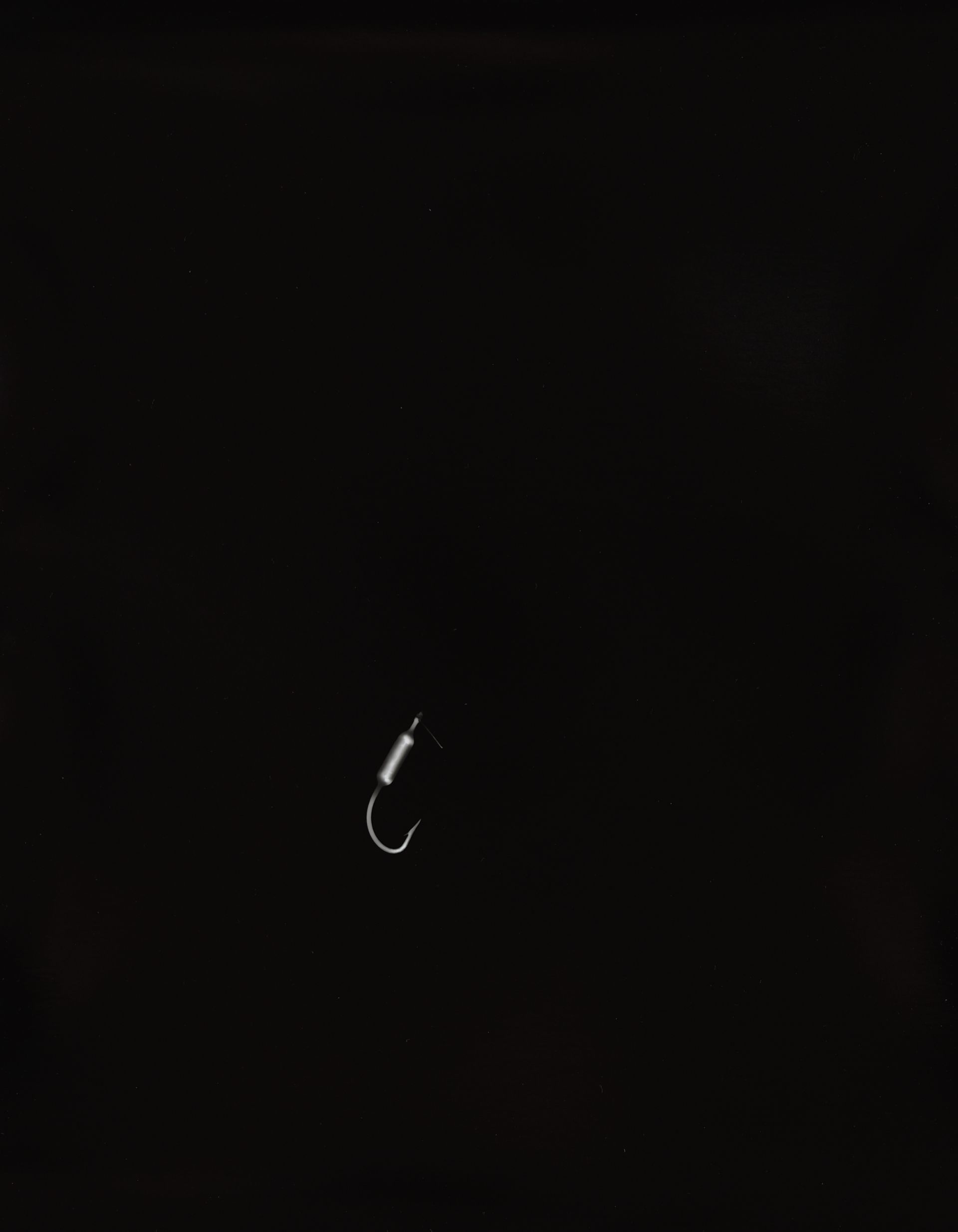
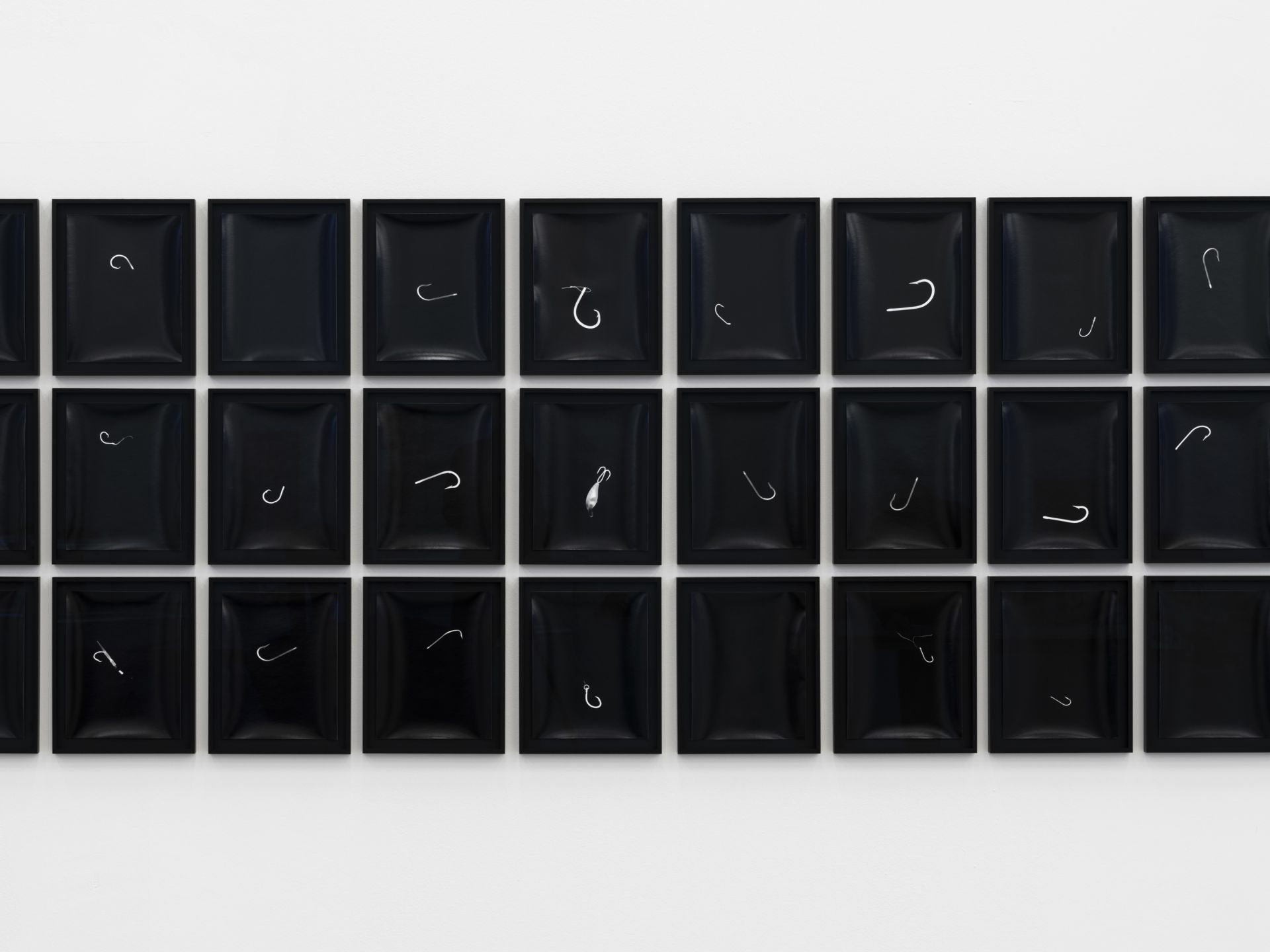
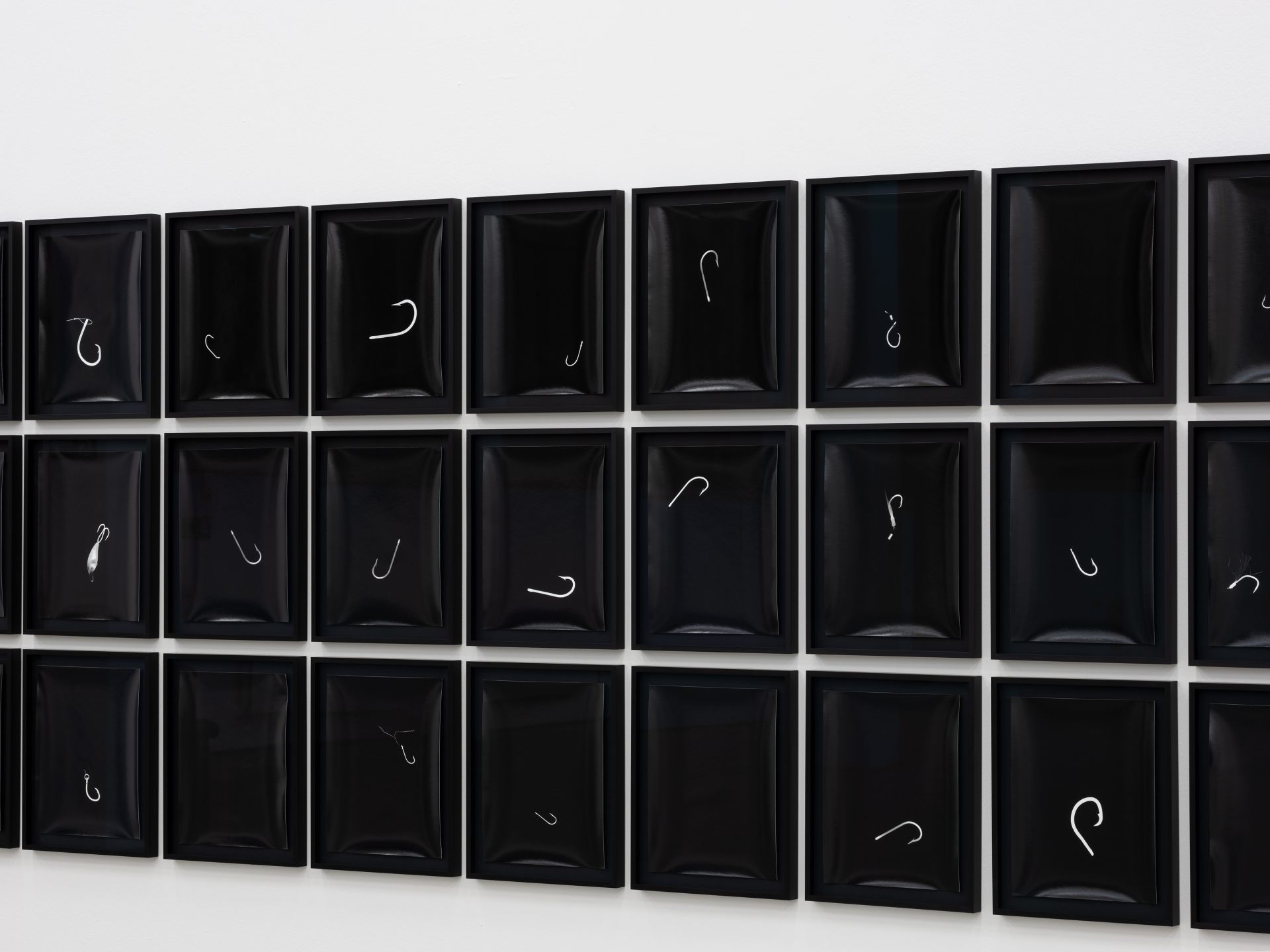
In Shiver, artist Simone Kessler worked with 52 fishing hooks that the renowned diver and shark conservationist Cristina Zenato had carefully removed from the bodies of Caribbean reef sharks over the last three decades. Each hook bears witness twice to a shark’s encounter with humans: once to its capture, the other to its release. Although sharks are legally protected in the Bahamas, they continue to be targeted: out of fear, as trophies, for their fins, or because fishermen perceive them as competitors. Globally, over one third of shark and ray species are now considered threatened, primarily due to overfishing.
Shiver can refer both to a group of sharks and to the visceral reaction provoked by the thought of sharks (or humans). Zenato has built a remarkable relationship of trust with the local sharks through calm, ritualized encounters and gentle touch. She also seems to have built a certain reputation among local sharks. Her usual diving spot attracts many individuals with distinguishing features that have earned them nicknames over the years, as well as newcomers bearing both old and fresh wounds. In a state of quiet cooperation, they allow her to remove the hooks in an often painful process, sometimes with her bare hands. These interventions represent acts of care and moments of alliance across species.
Zenato’s activism is an exercise of agency in support of a fascinating species that is often feared beyond justification. Having loaned part of her precious hook collection to the artist for a few days, she allowed these relics of harm to be transformed into an artwork: photograms of each individual hook, exposed on baryta paper. Each black-and-white image is a unique imprint and a subtle portrait of the shark whose body it pierced.
The work is composed of 52 photograms showing the shadows of hooks, along with additional black prints — together forming a large wall tableau. The black prints represent those sharks that did not encounter a hook or that could not be freed from their hooks; they mark a space where an image should exist but does not. This deliberate absence echoes the hooks that remain in the marine environment. Using only light, paper, and shadow, the hooks become delicate visual symbols of ecological loss, but also of connection and trust.
Cristina Zenato
Photograph with sharks by Kewin Lorenzen
Photographs of Shiver by Fred Dott for Neue Kunst in Hamburg